Starting Solids: A Simple First-Foods Guide for New Parents
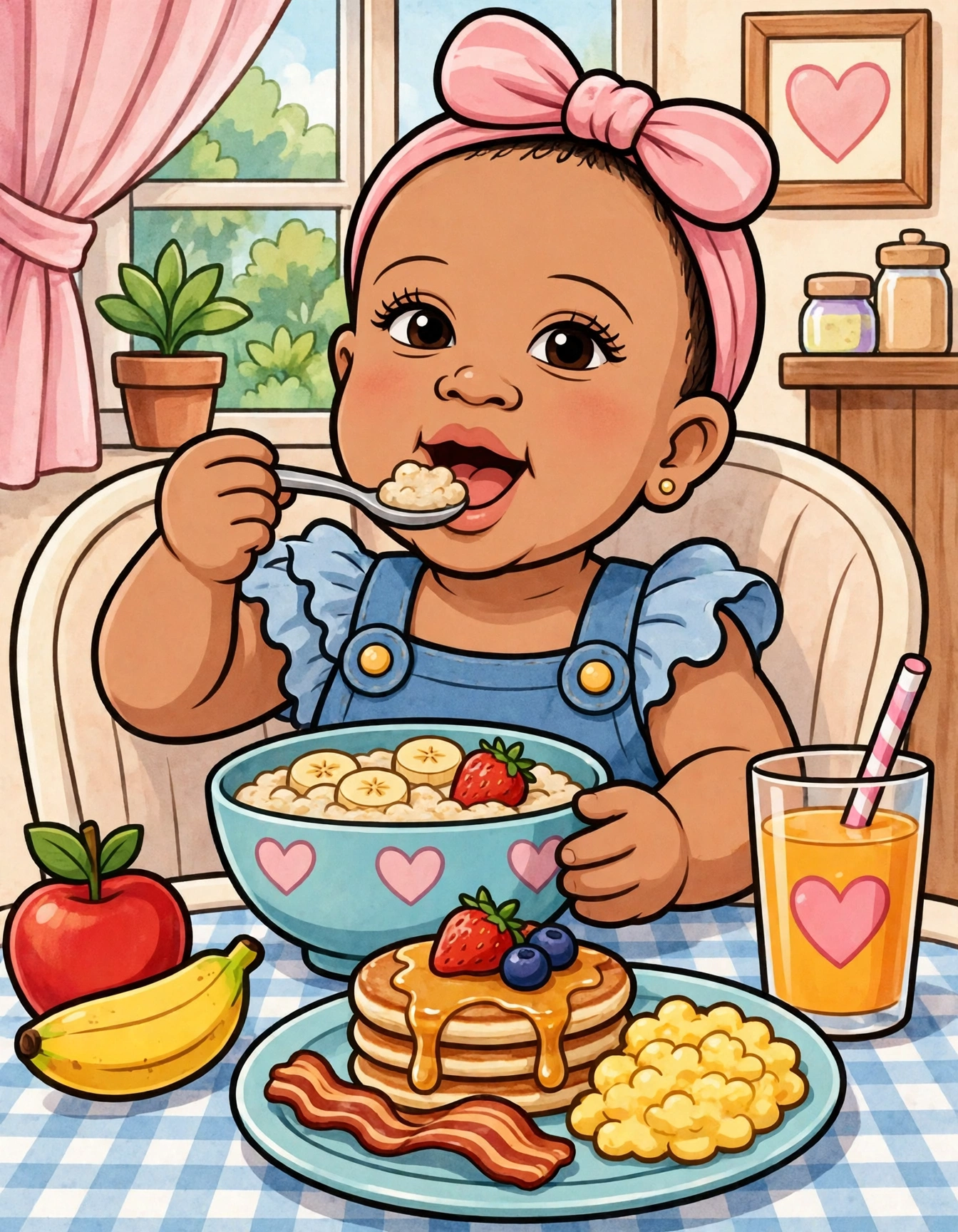
Around six months, something fun happens: your baby starts looking at your plate like it owes her money. That is usually the sign that solids are coming.
Starting solids is exciting, and a little scary. What food first? How much? What if she does not like it? Here is the simple way we did it with Nia.
This guide is parent-to-parent experience, not medical advice. Always check with your baby’s pediatrician about what is right for your baby.
Look for readiness first. Most babies are ready around six months. Signs: she can sit up with support, she holds her head steady, she watches you eat and reaches for food, and she opens her mouth when a spoon comes near. Your pediatrician can confirm at the six-month visit.
Start slow. One new food at a time, a few spoonfuls, soft and mashed. Banana, avocado, sweet potato, and oatmeal are friendly first foods. Wait a day or two before the next new food, so if something bothers her tummy, you know which food it was.
Offer variety. Over the weeks, move through the food families: fruits, vegetables, grains, proteins like egg, chicken, beans, and yogurt. Every new taste is practice. Some foods take five, ten, even fifteen tries before a baby accepts them — and no, today is not a “no” forever.
Take allergens seriously, calmly. The major allergens — milk, egg, peanut, tree nuts, soy, wheat, fish, shellfish, and sesame — are foods many doctors now suggest introducing one at a time, in small amounts, and watching for a reaction like a rash, swelling, vomiting, or trouble breathing. If you see a serious reaction, call your doctor or emergency services right away. Talk to your pediatrician about the plan for your baby, especially if allergies run in your family.
Write down what she tried. A simple checklist — the food, the date, and whether she loved it, liked it, or is not ready yet — keeps you from serving the same three foods forever, and it shows you how far she has come. Trying 100 foods in the first year is a fun goal many parents use.
Keep it fun. Food will go on the floor. It will go in the hair. That is not failure, that is learning. In the first year, breast milk or formula is still her main food — solids are practice, exploration, and joy.
Enjoy this part. It is messy, and it is wonderful.
— Dalvio, Nia’s dad
Want Nia’s 30 first foods checklist?
I made a simple printable checklist of Nia’s 30 first foods to try, with an allergen tracker.
Get the First Foods Checklist →